
A simple way to combat information overload while practicing improvisation: the 5x4 rule
We’ve all had the experience: all we wanted was to buy some olive oil at the grocery store. But we’re faced with a tower of selections, 5 shelves high: dozens of brands, all at slightly different price points, levels of quality; some imported, some made in the USA. So we stand in front of the shelves for 10 or 15 minutes, before we finally make a choice that we end up being less satisfied with than we would have been if we had chosen between 3-5 different products.
This phenomenon is referred to as “the paradox of choice.” While we love having options, the more that we have, the more effort that is required to make the choice. As musicians, many of us have chosen to learn to improvise because we want to have freedom - we want to have a choice in what we practice on a day-to-day basis.
When we decide to start learning to improvise, we decide that we need more information in order to make our improvisations sound better. We quickly accumulate a library of books, hundreds of YouTube tutorials, and even more ideas from teachers, mentors, and ourselves. We need a strategy to limit the information in front of us when we practice, without completely eliminating any sort of guidance.
To solve this, I developed the strategy of placing all of your potential practice items or prompts onto just one page. You should divide your page into four categories, each of which is related to a different challenge. For this week, I decided to divide my prompts into these categories: Targeted exercises, Forms, Practice variations, and Performance practice. The real power comes from combining items across categories. This expands the possibilities of what you can practice without feeling overwhelming. For example, if you’re practicing classical improvisation, you can integrate a motive into a sequence, or into a binary form. You can practice one hand with two voices simultaneously, and you can do that over a given partimento bass (a pre-written bassline meant to be harmonized). For jazz improvisation , you might combine a rhythmic exercise (triplet patterns) with a tune (Autumn Leaves) and a variation (play in all 12 keys). By placing a maximum of 5 items into 4 categories each, you have a 5x4 rule that helps keep your practicing targeted, but open. Choose items that address your current skill level and goals—you can always refresh the list next week.
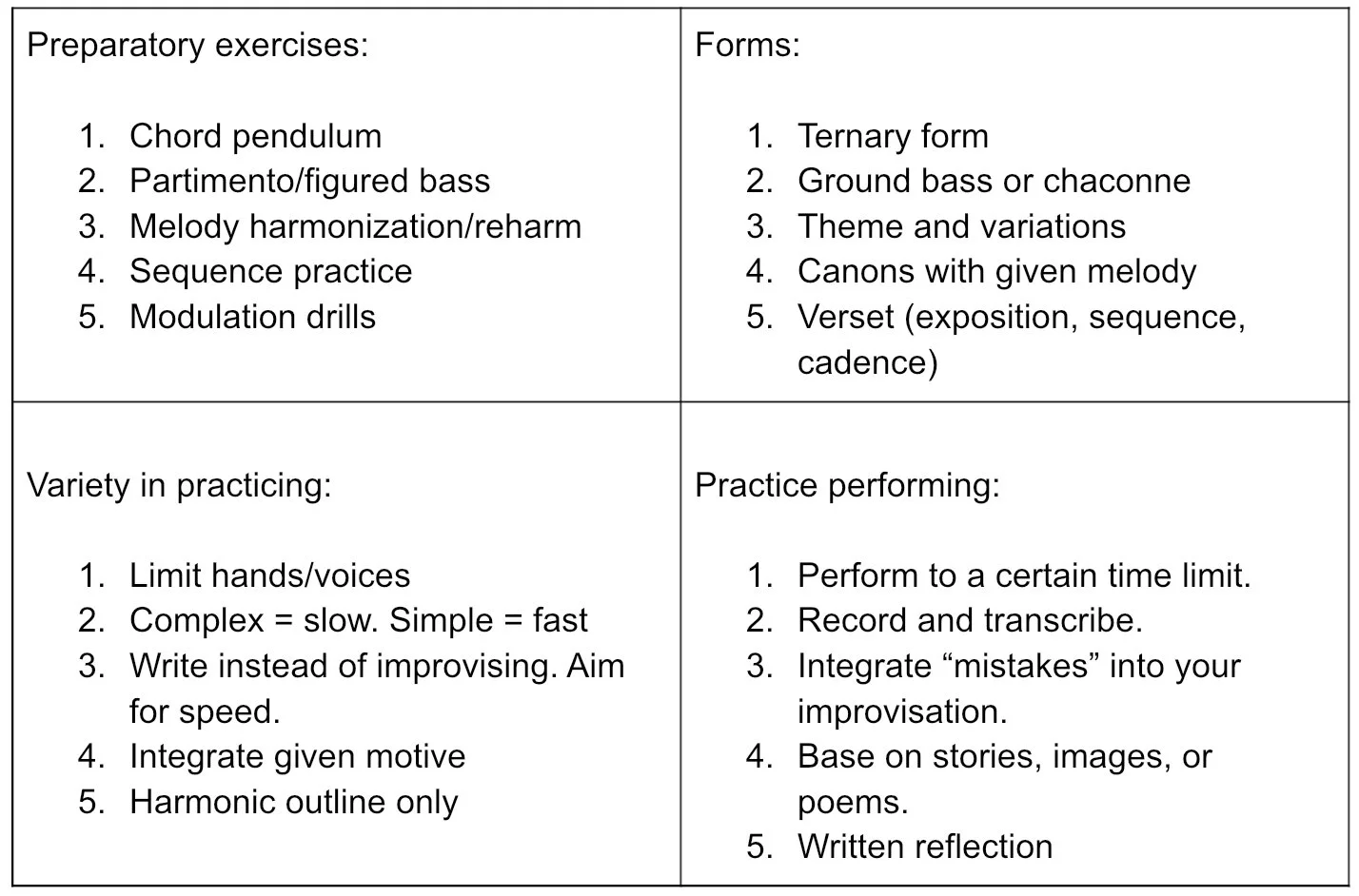
One final note: keep the individual items on your list as brief as possible. If you can use shorthand, use it. You are the only one that needs to understand your list, and it should just serve as a prompt to get you started practicing something you already understand the theory behind.
By limiting your choices to just 20 well-organized options, you’ll spend less time deciding and more time actually improving.